


Mature oak trees can shade a home, frame a driveway, and add lasting character to a property. Yet one poor cut can leave an oak with torn bark, weak regrowth, decay, or a branch structure that handles storms poorly. Local rules can create another problem. A homeowner may plan a simple pruning job, then learn that the city requires a permit or a licensed tree professional.
Before trimming oak trees, start with three questions: What type of oak is on the property? Where is the property located? Which branches need work? These answers shape the permit process, the safest season, and the right pruning method. ArborWorks checks each part before cutting, so the work supports the tree instead of creating a new risk.
Why Planning Matters Before Trimming Oak Trees
Oak branches can weigh hundreds or even thousands of pounds. Large limbs often spread over roofs, fences, driveways, pools, and utility lines. A branch that looks easy to remove from the ground may twist, split, or swing once a saw enters the wood. At the same time, the branch may carry more weight on one side than expected.
For this reason, oak pruning needs a clear goal. ArborWorks may remove deadwood, shorten an overextended limb, improve clearance, correct rubbing branches, or reduce weight near a weak union. Cutting branches just to make the canopy look smaller can cause more harm than good. Heavy thinning can expose bark to harsh sun, trigger dense shoots, and reduce the leaf area that feeds the tree.
Before work begins, our tree health inspection can check trunk unions, cavities, decay, root stress, storm damage, and signs of decline. That visit helps separate a pruning need from a larger tree-health or safety concern.
Check Local Permits Before Trimming Oak Trees
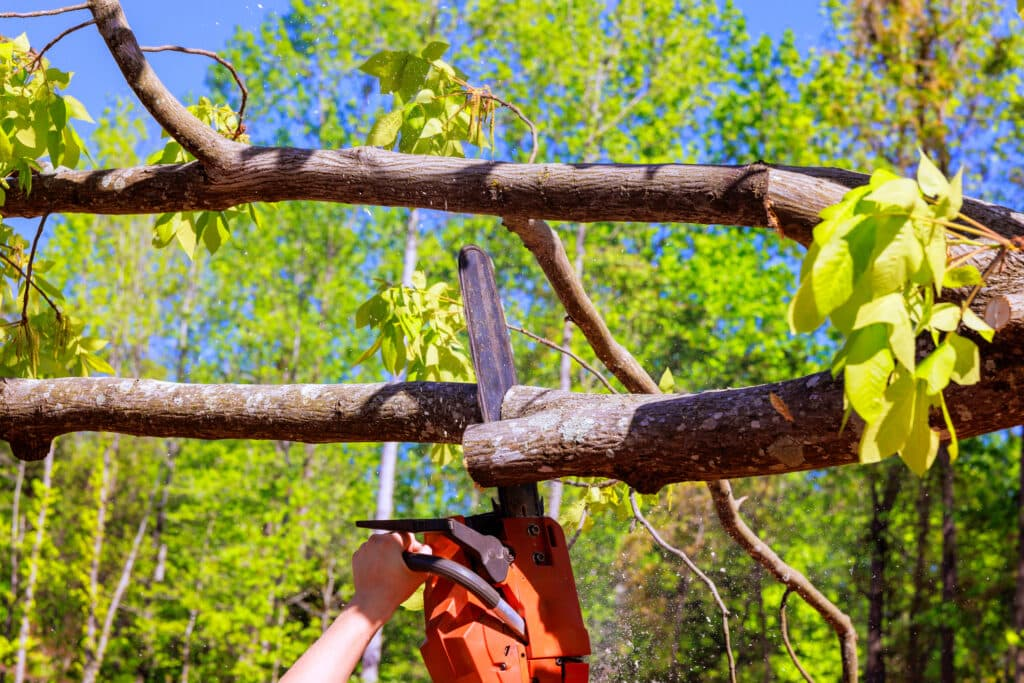
Oak tree trimming rules can change from one city or parish to the next. Property lines matter too. A tree may stand inside city limits, in an unincorporated part of St. Tammany Parish, inside an HOA, or near a public right-of-way. Each setting may carry a different rule.
In Mandeville, current city language gives live oaks added protection. The city classifies a live oak with a trunk diameter of six inches or more at breast height as a protected tree. The ordinance requires a tree removal permit before cutting, clearing, or removing a protected live oak. For a live oak measuring 12 inches DBH or more, the city requires a permit to prune primary and secondary branches, and a Louisiana-licensed arborist or state forester must complete that work. Unpermitted pruning may lead to fines, enforcement, or replanting duties.
That rule makes one point plain: “trimming” and “removal” don’t always sit in separate boxes under local code. A major limb cut may fall within a protected-tree permit process. Before trimming oak trees in Mandeville, confirm the current rule with the city’s Planning Department. Outside Mandeville, check the local municipality or parish office. Rules can change, so old advice from a neighbor may no longer match the code.
ArborWorks serves Mandeville, Covington, Madisonville, and other Northshore communities listed on our areas we serve page. Our team can help identify the work, document visible tree conditions, and explain which local office may need to review the project.
A Permit Checklist for Trimming Oak Trees
Before scheduling equipment or making cuts, use this checklist:
Confirm the property’s jurisdiction.
Start with the street address and check whether the property sits inside city limits. Next, look for HOA rules, servitudes, drainage areas, and public rights-of-way that may affect access or tree work.
Identify the oak species and trunk size.
Live oaks may receive stronger protection than other oak species. Measure and record the trunk diameter, then take clear photos of the full tree, trunk base, target branches, and nearby structures.
Write down the reason for pruning.
A permit reviewer may need more than “the limb is too big.” Note deadwood, cracks, roof contact, blocked access, storm damage, or a weak branch union. Photos and an arborist’s findings can make the request easier to review.
Wait for written approval when the city requires it.
A phone call can help, but written approval gives the property owner and tree crew a clear record. Keep the permit on site during the job, along with the approved work description.
Use a properly licensed and insured tree company.
Large oak work brings fall hazards, rigging loads, chainsaws, lifts, and property risk. ArborWorks uses ISA-certified arborist knowledge, local field experience, and trained crews for planned tree trimming in Mandeville. ArborWorks lists ISA Arborist SO-11097A and Louisiana Arborist License No. 2469 on the company website.
What Is the Best Time for Trimming Oak Trees?
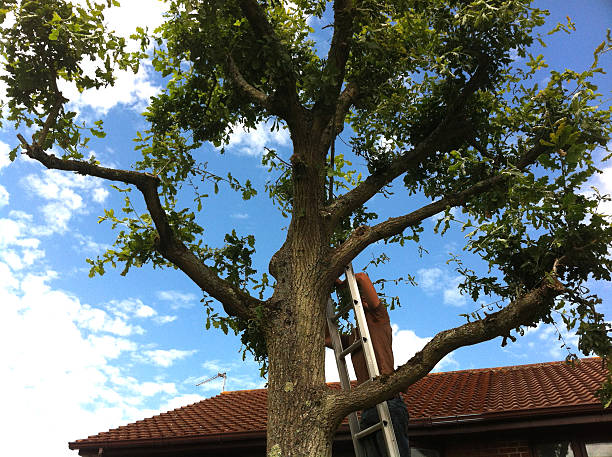
Homeowners often ask about the best time to trim oak trees. A single month doesn’t fit every oak or every job. The right timing depends on the oak species, branch condition, local weather, nesting activity, tree stress, and the amount of live canopy that needs removal.
For planned structural pruning, a cooler and drier period can make sense, especially before a strong flush of new growth. Late winter often gives an arborist a clearer view of branch structure on deciduous oaks. Live oaks follow a different leaf cycle, so timing may shift. At the same time, dead, cracked, hanging, or storm-damaged limbs may need faster action instead of waiting for an ideal season.
The LSU AgCenter recommends focusing live oak pruning on dead, dying, diseased, or damaged limbs and supporting sound structure in young trees. The same guidance urges property owners to use a trained, licensed professional for work on mature live oaks. Read the LSU AgCenter’s live oak canopy guidance.
Before ArborWorks chooses a date, we check recent weather, soil moisture, canopy condition, and the size of each planned cut. This approach keeps the schedule tied to the tree’s condition, not a calendar alone.
How Do You Trim an Oak Tree During Trimming Oak Trees Work?
“How do you trim an oak tree?” sounds like a simple question, yet the correct answer starts with deciding what not to cut. Good pruning keeps healthy structure, limits wound size, and removes branches for a clear reason.
ArborWorks follows these core practices:
- Start with dead, broken, diseased, or rubbing branches. These limbs can create direct safety or health concerns. Next, we check whether removal could change weight distribution on a long lateral limb or expose a weak union.
- Cut just outside the branch collar. The branch collar forms near the base of a branch. A proper cut leaves trunk tissue intact, so the tree can close the wound more effectively. A flush cut slices into trunk tissue, yet a long stub can die back and delay closure. The USDA Forest Service pruning guide explains branch-collar cuts and the three-cut method for larger limbs.
- Use a three-cut method on larger branches. The first cut goes under the branch, the second cut removes the branch farther out, and the final cut removes the short stub outside the collar. As a result, the falling limb has less chance to strip bark down the trunk.
- Keep enough live canopy. Removing too much foliage at one time can stress an oak and trigger weak shoots. Rather than forcing a major size change in one visit, ArborWorks may phase the work across more than one growing cycle.
- Avoid topping. Topping leaves large wounds and weakly attached shoots. Soon, the tree may look full again, but the new growth can break more easily in wind.
Common Mistakes During Trimming Oak Trees
One common mistake involves choosing cuts from the ground based on appearance alone. A branch may seem low or lopsided, yet that limb may balance another part of the crown. After removal, wind loading can shift to a weaker section.
Another mistake involves cutting too close to the trunk. Flush cuts remove protective tissue and create a larger wound. Leaving a long stub causes a different problem, since the stub can die and slow closure.
Next, some crews remove interior growth until the canopy looks hollow. This practice, often called lion-tailing, leaves heavy foliage at branch ends and strips smaller growth from the inside. As a result, long limbs can bend more in wind and carry greater end weight.
Storm season creates another trap. Last-minute cutting right before severe weather can lead to rushed choices. A better plan starts with ArborWorks’ storm prep and risk mitigation service, which checks deadwood, weak unions, overextended limbs, and targets near the tree.
When Trimming Oak Trees May Lead to Tree Removal
Pruning can solve many problems, but it can’t repair every defect. Extensive trunk decay, major root loss, a severe lean with soil movement, or a split main union may leave too little sound wood for safe retention. At that point, repeated cutting may reduce shade without lowering the main risk.
ArborWorks starts with preservation whenever the tree and site support that goal. Still, if an oak presents an unacceptable risk that pruning can’t reduce, our team can discuss safe tree removal. Any protected-tree removal may require city review, documentation, and replacement planting.
Why Choose ArborWorks for Trimming Oak Trees?
Large oaks need more than a saw and a ladder. ArborWorks brings ISA-certified arborist training, a Louisiana arborist license, local tree knowledge, rigging experience, and full cleanup to each project. Our crew plans cuts around roofs, fences, driveways, gardens, and nearby trees. Then, we lower limbs in controlled sections when free-falling could damage the property.
At the same time, our recommendations stay tied to the tree’s condition and the client’s goal. Some oaks need deadwood removal. Some need clearance over a roof. Others need a staged plan that reduces end weight without stripping the canopy. ArborWorks explains the options in plain language before work starts.
Schedule ArborWorks for Trimming Oak Trees
Before trimming oak trees, check the permit, inspect the tree, and choose each cut for a clear reason. A little planning can prevent legal trouble, property damage, and long-term harm to a mature oak.
ArborWorks provides licensed, ISA-certified tree care across Mandeville and the Northshore. Call (985) 951-0128 or visit the ArborWorks contact page to request an oak tree assessment and pruning quote.
FAQs About Trimming Oak Trees
Does Mandeville Require a Permit Before Trimming Oak Trees?
Mandeville’s current ordinance requires a permit to prune primary and secondary branches of a live oak measuring 12 inches DBH or more. A Louisiana-licensed arborist or state forester must perform that pruning. Call the city’s Planning Department to confirm the current steps for the property and proposed work.
What Is the Best Time for Trimming Oak Trees?
The best time depends on oak species, health, weather, and pruning goals. Cooler, drier periods often work well for planned structural cuts, but damaged or hanging limbs may need quicker service. An on-site check gives a better answer than a fixed date.
How Much Canopy Can ArborWorks Remove When Trimming Oak Trees?
The amount changes with tree age, condition, species, and branch size. ArborWorks aims to keep enough live foliage for normal tree function. For a mature oak, a light and focused pruning plan often serves the tree better than a major canopy reduction.
Can a Homeowner Handle Trimming Oak Trees Without a Tree Company?
Small, reachable cuts on a young tree may look manageable, but mature oak limbs create high fall forces and serious chainsaw risk. Permit rules may require a licensed professional as well. Work near roofs, roads, utility lines, or large limbs belongs with a trained and insured tree crew.
Does ArborWorks Top Oaks When Trimming Oak Trees?
No. Topping creates large wounds and weak regrowth. ArborWorks uses selective pruning cuts that support branch structure, clearance, tree health, and safety.