


A large tree can look healthy from the driveway and still have a weak branch union, hidden decay, root damage, storm injury, or a heavy limb hanging over a home. At the same time, a tree with an obvious defect is not automatically a removal candidate. Tree risk depends on the condition of the tree, the chance that part of it could fail, what could be struck, and how serious the damage could be.
For property owners searching how to do risk mitigation plan work for a dangerous tree, the safest starting point is a professional tree risk assessment. An ISA-certified arborist can inspect the tree, identify likely failure points, look at nearby targets, and recommend a practical response. ArborWorks uses this process to help property owners choose between pruning, monitoring, tree health care, storm preparation, or removal based on the condition found on site.
How to Do Risk Mitigation Plan Work Starts With Identifying the Tree and the Target
A risk mitigation plan should begin with two basic questions: What part of the tree could fail, and what could that failure hit? A dead branch above an unused corner of a large yard may carry a different level of risk than a similar branch above a driveway, bedroom, sidewalk, play area, or parked vehicle.
Next, an arborist looks at how often people, vehicles, or structures are present in the fall zone. A target that stays occupied for long periods can raise the level of concern. A low-use area may allow more time for monitoring or planned corrective work.
The first site review commonly looks for points such as:
- People and buildings in the fall zone: A tree beside a home, office, driveway, patio, road, or play area needs close attention since branch or trunk failure could cause injury or property damage. The plan should record which targets sit within reach of the tree or large limbs and how often those areas are used.
- Utility lines, fences, sheds, and other fixed property: Trees near electrical lines need special care, and property owners should never attempt risky cutting around energized lines. ArborWorks can assess the tree and help determine the right next step without turning a tree problem into a larger safety problem.
- Changes around the root area: Recent construction, trenching, soil removal, grade changes, flooding, or vehicle traffic can harm roots and reduce stability. In many cases, root damage is easy to miss from a quick look at the canopy, so the area around the trunk matters just as much as the branches overhead.
The USDA Forest Service Tree Risk Assessment Form records structural condition and site factors as part of a tree risk review. That same basic idea applies to residential and commercial properties: risk involves both the condition of the tree and what sits nearby.
How to Do Risk Mitigation Plan Inspections by Checking the Whole Tree
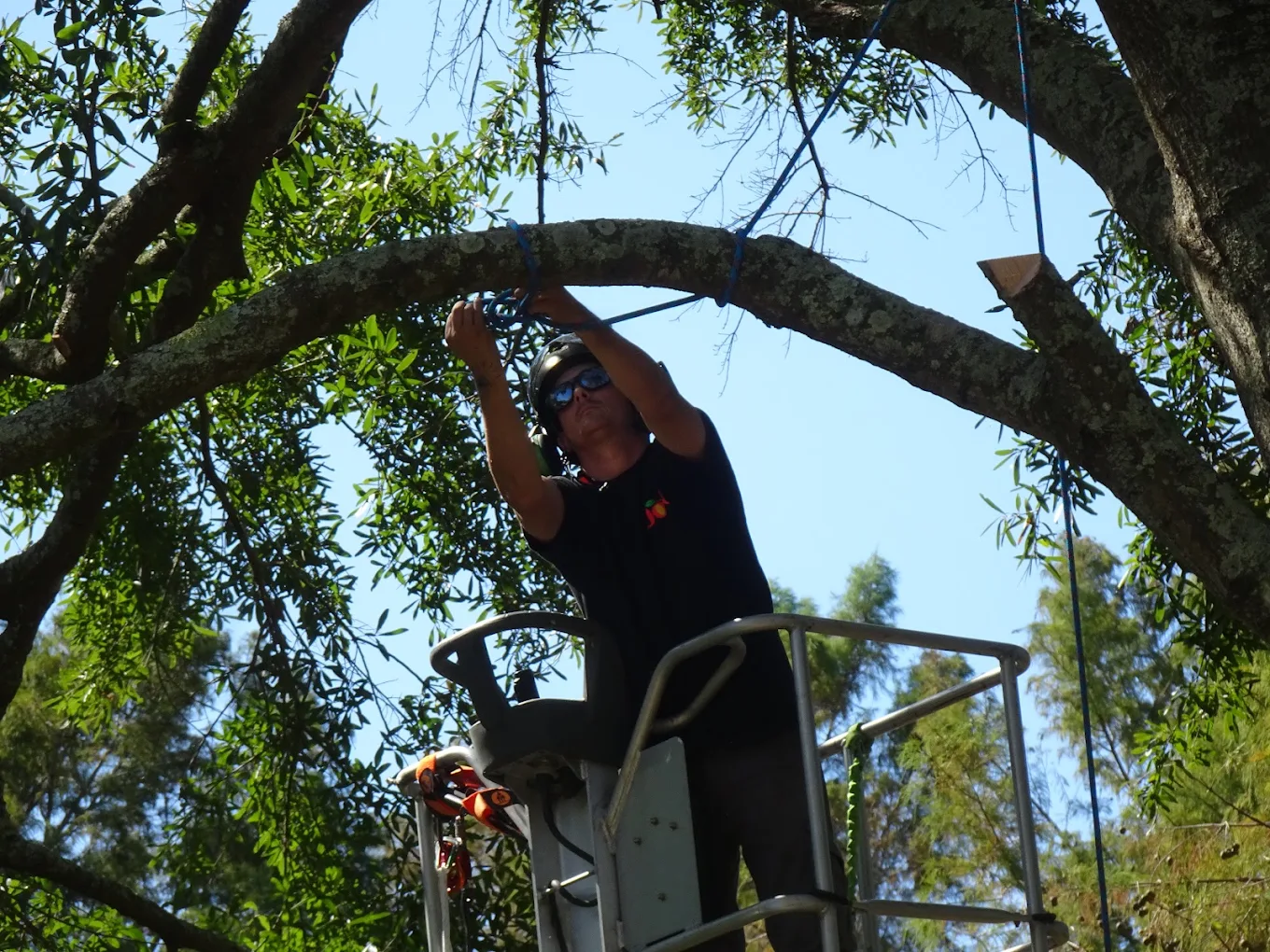
Once the target area is clear, the next step is a full tree inspection. Looking at one broken limb is not enough. An arborist checks the crown, trunk, branch unions, root flare, visible roots, and nearby soil for signs that could raise the chance of failure.
Inspect the Crown and Branches
An arborist examines the canopy for deadwood, cracked limbs, hanging branches, weak codominant stems, included bark, old storm wounds, and uneven growth. These conditions can increase the chance of branch failure, especially when large limbs extend over homes, driveways, sidewalks, or other frequently used areas.
The inspection also considers whether a defect affects one branch or several parts of the crown. A single dead limb may require selective pruning, while multiple damaged or poorly attached branches may indicate a broader structural concern.
Check the Trunk and Branch Unions
The trunk and major branch unions can reveal problems that are not visible from a quick driveway inspection. An arborist may look for cavities, cracks, fungal growth, decay, weak unions, split stems, or a sudden lean.
A green canopy does not always mean the trunk is sound. Internal decay or a damaged union may exist beneath healthy-looking foliage. If a visual inspection raises questions, the arborist may recommend a closer review of the affected area.
Examine the Root Flare and Soil
Tree stability depends heavily on the root system. At ground level, an arborist checks the root flare, visible roots, surrounding soil, and the base of the trunk for signs of damage or reduced anchorage.
Warning signs may include lifting soil, cut roots, decay near the base, damaged buttress roots, soil erosion, flooding, compaction, or recent grade changes. Construction, trenching, and vehicle traffic near the root zone can also affect stability even when the canopy appears healthy.
Use a Professional Tree Health Inspection
A Tree Health Inspection from ArborWorks can help separate a manageable defect from a condition that calls for faster action. This matters since tree condition can’t be judged from leaf color alone.
Depending on what the arborist finds, a visual review may provide enough information for a recommendation. In other cases, closer inspection may be needed. This could include checking a branch union from an elevated position, examining a cavity, or reviewing the root area in more detail.
Connect Defects to Possible Failure
After identifying defects, ArborWorks considers how each one could fail. The main concern may be one dead branch, a cracked leader, part of a split trunk, or the entire tree.
The arborist then considers how likely that section appears to fail within the planning period and what could sit in its path. This step connects the tree’s condition to the actual risk on the property instead of treating every defect as equally serious.
Consider the Consequences of Failure
The result of a failure matters as much as the defect itself. A small limb above open lawn does not create the same possible outcome as a large trunk section leaning over a bedroom.
For this reason, several trees on the same property may receive different priority levels. A tree with a moderate defect beside a home may require faster attention than a tree with a more visible defect in an unused part of the yard.
Prioritize the Highest-Risk Trees First
Planning risk mitigation this way helps prevent a common mistake: spending money on the most noticeable tree instead of addressing the tree with the greatest risk first.
A complete inspection gives property owners a clearer basis for choosing between pruning, monitoring, tree health care, storm preparation, or removal.
How to Do Risk Mitigation Plan Work by Choosing the Right Treatment
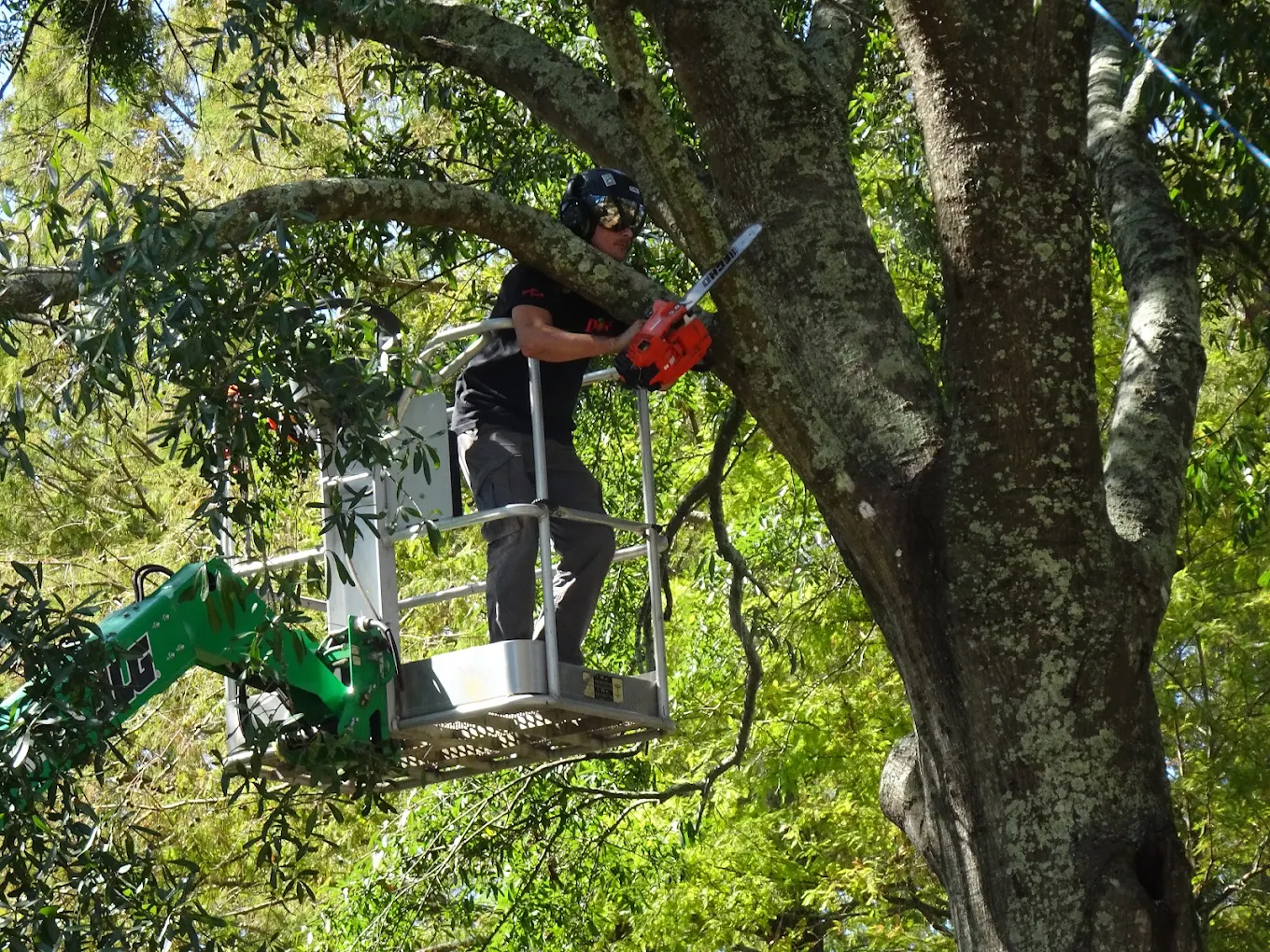
Risk reduction does not always mean removing an entire tree. In many cases, the best response is the least invasive option that lowers the risk to a reasonable level and supports the tree’s future health.
A tree risk mitigation plan may include one or more of these actions:
- Selective pruning or deadwood removal: Removing dead, broken, cracked, or poorly attached limbs can reduce the chance of branch failure. ArborWorks may recommend Tree Trimming when targeted pruning can reduce risk without removing a tree that can safely remain on the property.
- Crown reduction or structural pruning: A heavy limb or overextended section can place extra force on a weak union. In some cases, careful reduction can lessen that load and lower the chance of breakage. The cuts need to match the tree’s structure and condition, so random topping is not a proper risk-reduction method.
- Tree health care and monitoring: Some problems call for treatment, soil care, or a scheduled recheck rather than immediate removal. For example, a tree showing early decline may need a health inspection followed by future structural reviews to watch for changes.
- Moving or reducing the target: Risk can sometimes drop by changing how an area is used. A picnic table, parking spot, bench, or play item may be moved outside the possible fall zone. This step will not repair a tree defect, yet it can form part of a temporary or site-management plan.
- Tree removal: Some trees reach a point where pruning or monitoring will not reduce the risk far enough. Severe trunk damage, major root failure, extensive decay, or heavy storm damage can make Tree Removal the safer choice. ArborWorks plans removals around buildings, access points, nearby trees, fences, driveways, and other property features.
The best plan may use more than one action. For instance, a mature tree may need deadwood removal now, another health check later in the year, and a structural review before the next storm season.
How to Do Risk Mitigation Plan Scheduling With Clear Priorities and Follow-Up
A written plan needs a timeline. Without a target date, a known risk can remain untouched until heavy wind or a storm turns a manageable issue into an emergency.
A practical schedule can divide tree work into clear priority levels:
Immediate action.
A hanging limb above an occupied area, fresh trunk split, active root plate movement, or heavily storm-damaged tree may call for fast site control and professional service. Keep people and vehicles away from the possible fall area until an arborist can assess the tree and reduce the hazard.
Near-term work.
A structural defect that is not failing at the moment may still need pruning, health care, support work, or removal within a set period. In this case, the risk mitigation plan should name the recommended action and target date instead of leaving the task open-ended.
Routine monitoring.
A lower-risk condition may remain in place with scheduled inspections. After that, the plan should state which changes call for a fresh assessment, such as new cracking, a sudden lean, canopy loss, fungal growth, storm injury, or construction close to the roots.
For Northshore properties, Storm Prep & Risk Mitigation can become part of the schedule before severe weather arrives. Early inspections give ArborWorks more room to plan pruning or removal safely rather than handling every tree concern after a storm warning appears.
Tree Risk Plans Need Ongoing Records and Follow-Up
Tree risk changes over time too. A tree that has an acceptable risk level today may need another response after a hurricane, lightning strike, construction project, flooding event, or new decay.
For this reason, a good plan should record the tree location, species when known, visible defects, nearby targets, recommended work, completion date, and next inspection date. Photos can help show whether cracks, cavities, lean, canopy loss, or root conditions change between visits.
At the same time, completed work should become part of the record. If ArborWorks prunes a weak limb, removes deadwood, treats a health problem, or removes a high-risk tree, that service creates a useful history for future inspections.
A fresh review is a good idea after strong wind, hurricane damage, lightning, flooding, nearby excavation, root cutting, a new crack, sudden lean, large limb loss, or quick canopy decline. In fact, any sudden structural change is a good reason to keep people away from the possible fall zone and call an arborist.
ArborWorks works across communities on the Northshore. Property owners can check the Areas We Serve page for local service information.
How to Do Risk Mitigation Plan Work Safely Without Creating a Bigger Hazard
Tree risk work involves heavy limbs, unstable trunks, climbing equipment, chainsaws, rigging, and electrical hazards. DIY cutting can shift a tree’s weight and cause unexpected failure.
Stay away from hanging limbs, split or uprooting trunks, storm-damaged trees, and trees near power lines. Keep the area clear and have a qualified arborist assess the condition.
From a safe location, provide ground-level photos, note when cracks or leaning began, and share details about recent storms or construction. Professional assessment is especially important because decay, root damage, and weak branch unions may not be visible from the ground.
Get a Risk Mitigation Plan From ArborWorks Before a Tree Problem Gets Worse
Learning how to do risk mitigation plan work starts with one main goal: reduce the chance that a tree or branch will hurt someone or damage property. The process starts with the tree, the defect, and the possible target. From there, the plan sets the treatment, priority, timeline, and future inspection schedule.
A high-risk tree deserves more than a quick guess from the ground. ArborWorks can inspect the condition, explain the available options, and carry out recommended pruning, tree health care, storm preparation, or removal work.
For help with a dangerous, storm-damaged, or questionable tree, call ArborWorks at (985) 951-0128 or use the Contact Page to request an assessment. Acting before the next storm or branch failure can turn a possible emergency into planned tree care.
How to Do Risk Mitigation Plan FAQs for Property Owners
Does every dangerous-looking tree need removal?
No. Some defects can be managed through pruning, target management, tree health care, or monitoring. The right choice depends on the tree’s structure, condition, location, possible failure point, and what sits in the fall zone. ArborWorks can assess these factors before recommending removal.
How often should a high-risk tree be inspected?
The inspection schedule depends on the condition of the tree and the level of risk. A tree with a known structural concern may need a shorter recheck period than a stable tree with no major defects. After a strong storm or sudden structural change, schedule a new review rather than waiting for the regular inspection date.
Can pruning make a risky tree safer?
Yes, in the right situation. Selective pruning can remove dead or weak limbs, reduce weight on overextended branches, and correct certain structural problems. Poor cuts or excessive pruning can create new problems, so the work needs to match the tree’s condition and natural growth.
What tree warning signs call for faster attention?
Fresh cracks, hanging limbs, sudden lean, lifting soil near the roots, split branch unions, large cavities, major storm injury, or a tree contacting a structure can call for faster attention. Keep the area below or beside the damaged section clear until an arborist can inspect the tree.
Who should prepare a tree risk mitigation plan?
An ISA-certified arborist is a strong choice for tree risk planning. ArborWorks can inspect the tree, explain the condition in simple terms, compare treatment choices, and create a practical work plan based on the tree and surrounding property.