


A mature tree can look healthy from the ground and still have a weak branch union high in the canopy. That weakness may stay hidden for years, then open during strong wind, heavy rain, or a sudden storm. In many cases, proper tree cabling and bracing can reduce excess movement and give weak limbs or trunks added support.
This service does not turn a damaged tree into a risk-free tree. No cable, rod, or pruning cut can promise that a tree will never fail. Still, a support system may help preserve a tree when the structure remains sound enough to keep. The right choice starts with a close tree health inspection by an ISA-certified arborist who can check the canopy, trunk, root flare, branch unions, nearby targets, and past storm damage.
What Is Tree Cabling and Bracing, and How Does It Work?
Homeowners often ask, “What is tree cabling and bracing, and can it save a tree?” Cabling uses high-strength materials placed between selected limbs or stems in the upper canopy. The system limits how far those sections can pull apart during wind and rain. Bracing uses metal rods placed through a weak or split union, often lower in the tree, to hold the connected wood in a more fixed position.
Cables and rods serve different jobs, yet both may be part of one plan. A cable supports movement higher in the canopy, and a brace rod supports the weak union closer to the split. In some cases, selective tree trimming comes first. Reducing end weight from a long limb may lower the force placed on the weak attachment before any hardware goes in.
The University of Tennessee Extension explains that tree support systems limit movement in weak branches, leaders, or the root system and may lower the chance of injury or property damage. A trained arborist must still match the system to the tree, the defect, and the nearby risk.
Signs That Tree Cabling and Bracing May Be Needed
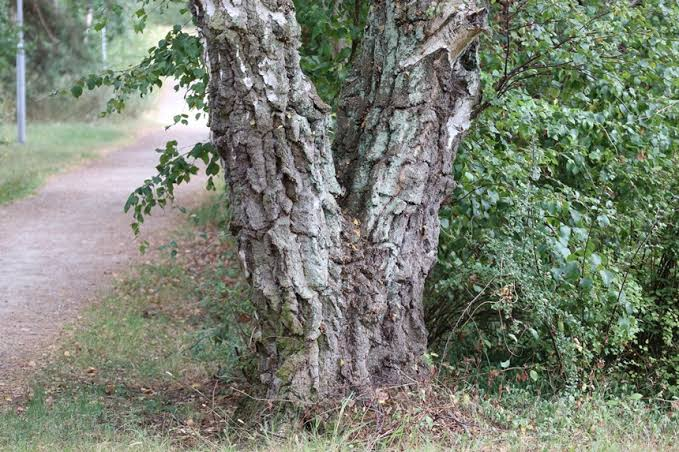
A support system may make sense when a tree has a correctable structural weakness rather than widespread decline. Common warning signs include:
Two or more main stems growing from one narrow union.
These codominant stems may press against each other as the tree grows. Bark can become trapped inside the union, leaving less solid wood to hold the stems together. A cable or brace may reduce spreading when the rest of the tree remains healthy.
A visible crack where large limbs or trunks meet.
A fresh crack calls for fast attention, mainly when the split hangs over a roof, driveway, play area, sidewalk, or parking space. The crack may need pruning, bracing, cabling, or removal of the affected section, based on depth and location.
Long, heavy limbs with too much weight at the ends.
Overextended branches catch more wind and place added force on the attachment point. Crown reduction pruning may lower that load. From there, cabling may add another level of support if the branch has enough sound wood.
Past storm damage that weakened a branch union.
A limb may remain attached after a storm yet have internal cracks or torn fibers. Our storm prep and risk mitigation service can help spot weak points before the next round of severe weather.
A mature tree with high property or personal value.
A healthy, well-placed tree may be worth preserving when the defect can be managed. Cabling and bracing trees can buy time, reduce movement, and support a planned care schedule.
Not every fork, lean, or low branch needs hardware.
Some tree shapes are normal for the species. For that reason, the full tree must be checked before a recommendation is made.
How Tree Cabling and Bracing Helps Weak Tree Unions
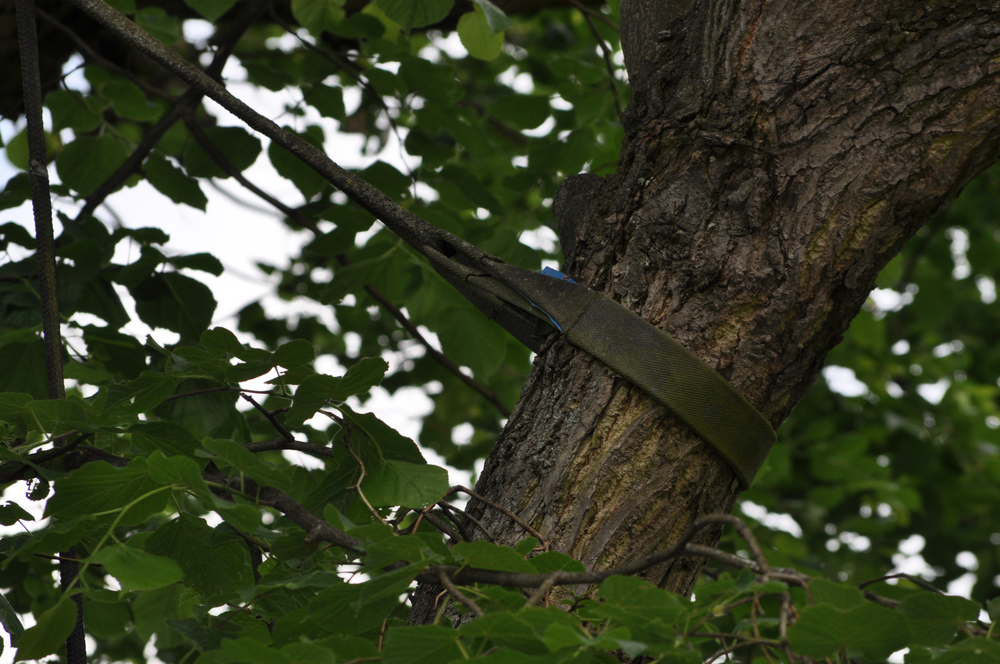
Weak unions often form where two stems meet at a tight angle. As each stem grows wider, the connection may have less room to form strong supporting wood. Wind can then make the stems move away from each other. Over time, that repeated motion may deepen a crack or begin a split.
A properly placed cable reduces the distance between moving stems. The cable does not make the union solid again. Instead, it lowers some of the strain during movement. Brace rods may hold a split union in place and reduce side-to-side spreading.
This is one reason system placement matters so much. Hardware installed too low may provide poor support. Hardware installed in weak, decayed, or hollow wood may not hold. Excess tension may change natural tree movement and shift stress to another area. ArborWorks bases each plan on the tree’s structure rather than using one setup for every tree.
What Happens During a Tree Cabling and Bracing Inspection?
A professional tree health inspection starts at ground level and moves through the full structure of the tree. Our arborist looks for decay, cavities, cracks, deadwood, weak unions, root movement, fungal growth, old pruning wounds, and signs of recent limb drop.
Next, the inspection considers what could be hit if a branch or trunk fails. A defect over an open part of the yard may carry a different level of risk than the same defect over a home, pool, vehicle, road, or outdoor seating area. Tree size, species, age, wind exposure, soil condition, and storm history matter as well.
After the inspection, ArborWorks may recommend one or more steps:
- Prune selected limbs to reduce weight. Proper cuts can shorten overextended branches and reduce strain on a weak union. The goal is to lower load without stripping the canopy or topping the tree.
- Install a cable, brace rod, or combined support system. The system type, height, anchor point, and tension must fit the tree. Static and dynamic systems work in different ways, so the choice depends on the amount of movement the tree can safely keep.
- Set an inspection schedule. Trees keep growing, and hardware conditions change. Cables, anchors, rods, branch unions, and nearby wood need routine checks, mainly after a major storm.
- Recommend removal when support cannot lower the risk enough. Severe decay, root failure, a major trunk split, or poor anchor wood may rule out support. In that case, professional tree removal may protect the property from a larger failure.
Types of Tree Cabling and Bracing Systems
Tree bracing systems fall into a few main groups. Each setup has a different job, so an arborist must choose the right fit.
- Static cable systems use steel cable and fixed anchors to limit movement between limbs or stems. This setup may suit a weak union that needs firm support. Placement and tension must be exact enough to reduce movement without creating a new weak point.
- Dynamic cable systems use flexible, high-strength material that allows controlled movement. Natural movement helps a tree build wood, yet too much movement may pull a weak union apart. A dynamic system aims to keep that motion within a safer range.
- Brace rods pass through a weak or split union and hold connected stems together. One rod may not be enough for a large union, so the number and position depend on the defect. Bracing often works with a cable higher in the canopy.
- Guying systems support a whole tree rather than one branch union. Guying may be used for a recently planted tree, a root plate concern, or another special condition. This service differs from standard crown cabling and needs its own site review.
No support system lasts forever without care. Hardware can loosen, branches can grow around anchors, and decay can spread. Regular checks help ArborWorks decide whether the system should stay, change, or come out.
When Tree Cabling and Bracing Is Not the Right Choice
Some trees have moved past the point where hardware can provide a reasonable safety margin. A cable cannot restore dead roots, replace missing trunk wood, stop advanced decay, or reconnect a fully failed union.
Support may not be the right choice when:
- The trunk has major decay or a large hollow area near the proposed anchor points.
- The root plate lifts, cracks, or shifts during wind.
- A main stem has separated too far to return to a stable position.
- The canopy has broad dieback linked to poor tree health.
- The expected failure could cause severe harm, and support cannot lower that risk enough.
- The tree needs repeated large repairs with little chance of stable future growth.
In these cases, removal may be the safer plan. ArborWorks will explain the reason, show the visible defects, and discuss practical next steps. A clear recommendation helps a property owner make a sound choice without guessing.
Why Professional Tree Cabling and Bracing Matters
Cabling and bracing trees is not a safe do-it-yourself job. The work often takes place high in the canopy, near heavy limbs under tension. Drilling in the wrong place may open healthy wood to injury. Weak anchors may pull out. Poor cable placement may move stress from one defect to another.
An ISA-certified arborist can judge whether the tree is a good candidate, select the proper hardware, and place each part based on accepted tree care methods. ArborWorks can pair the system with pruning, health care, storm planning, or removal when needed. Our service is available across the communities listed on our areas we serve page.
Schedule a Tree Cabling and Bracing Assessment With ArborWorks
A weak union rarely gets stronger on its own. If a tree has a crack, split trunk, heavy limb, storm injury, or two main stems pulling apart, schedule an assessment before the defect grows.
ArborWorks provides ISA-certified tree care with clear recommendations based on the tree and the property around it. Our team can inspect the concern, explain whether tree cabling and bracing is a good fit, and create a care plan that may include pruning, support, storm preparation, or removal.
Call ArborWorks at (985) 951-0128 or use our contact page to schedule a tree inspection.
Tree Cabling and Bracing FAQs
Can Tree Cabling and Bracing Stop Every Branch From Breaking?
No. A support system lowers movement and may reduce the chance of failure, yet no system can remove all risk. Storm strength, hidden decay, root condition, and future tree growth can change how a tree responds.
How Long Does Tree Cabling and Bracing Last?
Service life depends on the system, tree growth, weather, hardware condition, and the original defect. Routine inspections are part of the care plan. A check after major storms is wise, too.
Does Tree Cabling and Bracing Hurt the Tree?
Some systems require drilling for anchors or rods, and dynamic systems may use less invasive attachment methods. Proper placement limits injury and protects sound wood. Poor installation can cause damage, which is why trained tree care matters.
Can Pruning Replace Tree Cabling and Bracing?
Sometimes. Weight reduction may lower strain enough that hardware is not needed. In other cases, pruning and support work better together. The inspection will show which plan fits the tree.
Is Tree Cabling and Bracing Better Than Tree Removal?
That answer depends on tree health, structure, location, and the result of a failure. Support may preserve a healthy tree with a manageable defect. Removal may be safer when decay, root loss, or a severe split leaves too little sound wood.