Storm Damage & Emergency Tree Removal on the Northshore
When a storm drops a tree on your roof, blocks your driveway or leaves a split trunk hanging over the house, it needs to be handled safely and without making the damage worse. ArborWorks removes storm damaged and fallen trees across the Northshore, cleans up the debris and gives you the photos and itemized invoice your insurance company will ask for.
Our team of arborists are experts in tree care and can ensure the health of your trees and shrubs.
ISA Arborist SO-11097A
What to Do Right After a Tree Comes Down
Keep everyone away from the tree and anything it is touching. If a tree or limb is on or near a power line, stay back and call your utility before anything else, because only the utility can make that line safe. Then take photos of the tree and the damage from several angles before anything is moved. Those photos matter for your insurance claim.
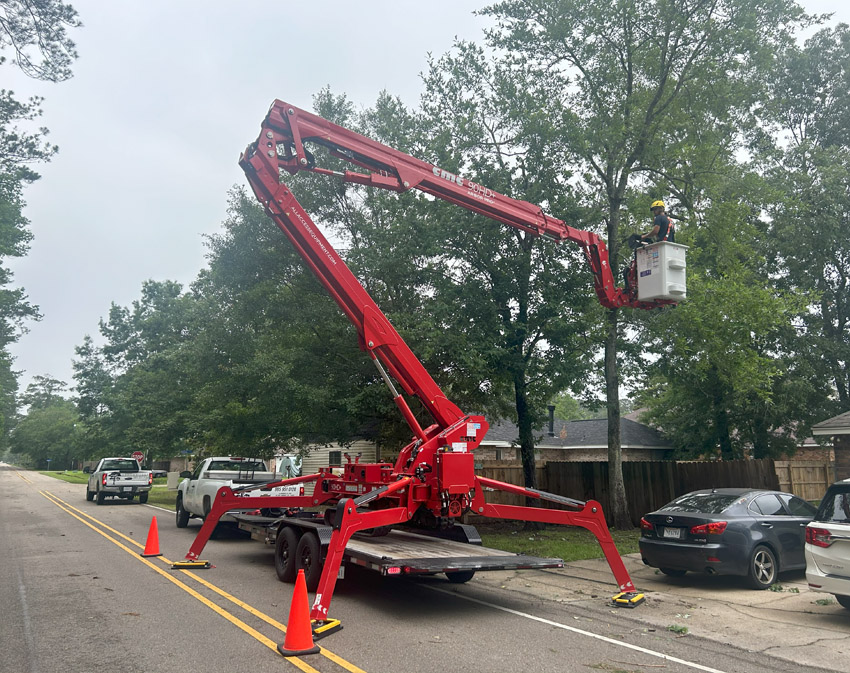
Cutting a tree where it lies on a roof can drop the rest of it through the ceiling. We rig the tree and lift or lower it off in pieces, so the house takes no more damage than it already has. Large jobs may need a crane or bucket truck, and we tell you that up front.
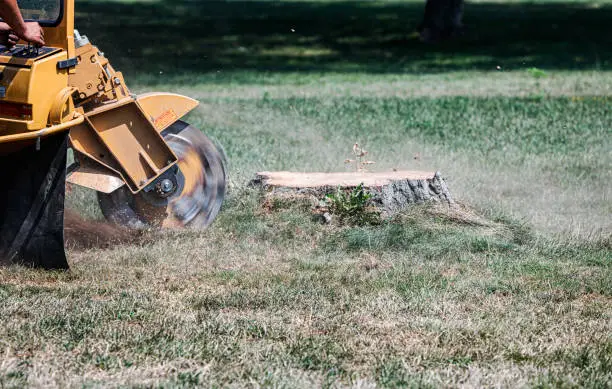
Days of rain before a storm leave the ground soft, and pines and water oaks with shallow roots tip over whole. An uprooted tree can still be dangerous, because the root plate can snap back upright when the trunk is cut free. We cut it in the right order, haul away the wood and can grind the stump on the same visit.
A broken limb caught high in a tree, or a trunk split down the middle, can fall at any time and is loaded with tension that makes it unpredictable to cut. These are some of the most dangerous jobs in tree work. Leave them to a trained crew with the right rigging.
Once the dangerous trees are down, we clean up the limbs and debris scattered across the yard. We also look over the trees that are still standing. Storms crack limbs, tear roots and loosen trees in ways that are easy to miss, and a tree that made it through one storm may not make it through the next.
Storm work costs more than a scheduled removal because of the risk, the rigging and the timing. Most homeowners policies pay to remove a tree that falls on a covered structure because of wind or another covered event, up to the limits in your policy. A healthy tree that falls in the yard without hitting anything is often not covered. See our guide to tree removal cost for what changes the price, and check your policy or call your agent about coverage.
Why Homeowners Call ArborWorks After a Storm
Licensed and certified: Louisiana Arborist License #2469 and ISA Certified Arborist SO-11097A.
Fully insured: general liability and workers’ compensation, with proof of coverage on request.
Owner on the job: founder Ladson Poole is an ISA Certified Arborist who still works on job sites.
Clean yards: we haul away every branch and log when the job’s done.
Usually, if the tree fell on a covered structure like your house or garage because of wind or another covered event. Coverage limits vary by policy. Take photos before anything is moved, and we will give you an itemized invoice for your claim.