


Trees depend on wide, healthy root systems for water, nutrients, and support. That makes root problems tricky for property owners. A raised sidewalk, cracked driveway, exposed root, or construction project can make cutting a root look like a quick fix, yet a poorly placed cut can weaken the tree and create a larger safety concern.
Tree root pruning can help in the right situation, but it isn’t routine maintenance. The location, size, and purpose of each root matter. For that reason, ArborWorks recommends having an ISA-certified arborist inspect the tree before anyone digs, saws, trenches, or cuts near the root zone. A careful inspection can show whether pruning makes sense or whether another option would protect the tree and property more effectively.
What Is Tree Root Pruning, and What Does It Do?
So, what is root pruning? Tree root pruning is the selective cutting and removal of certain roots for a clear tree-care or property-management reason. An arborist may recommend it to address a root conflict, remove a girdling root, prepare a tree for relocation, or manage roots near planned construction.
The goal isn’t to cut as many roots as possible. Instead, the work should target a specific problem and preserve as much healthy root tissue as possible. Roots carry water and nutrients through the tree, and larger roots can contribute to anchoring. Cutting too close to the trunk or removing too much of the root system can stress the tree and may reduce stability.
The University of Florida IFAS notes that root pruning may be used to address conflicts with sidewalks and curbs, prepare for construction or utility work, and manage certain tree-health concerns. The same resource warns that indiscriminate root cutting can lead to tree failure.
Signs Tree Root Pruning May Be Necessary Around Your Property
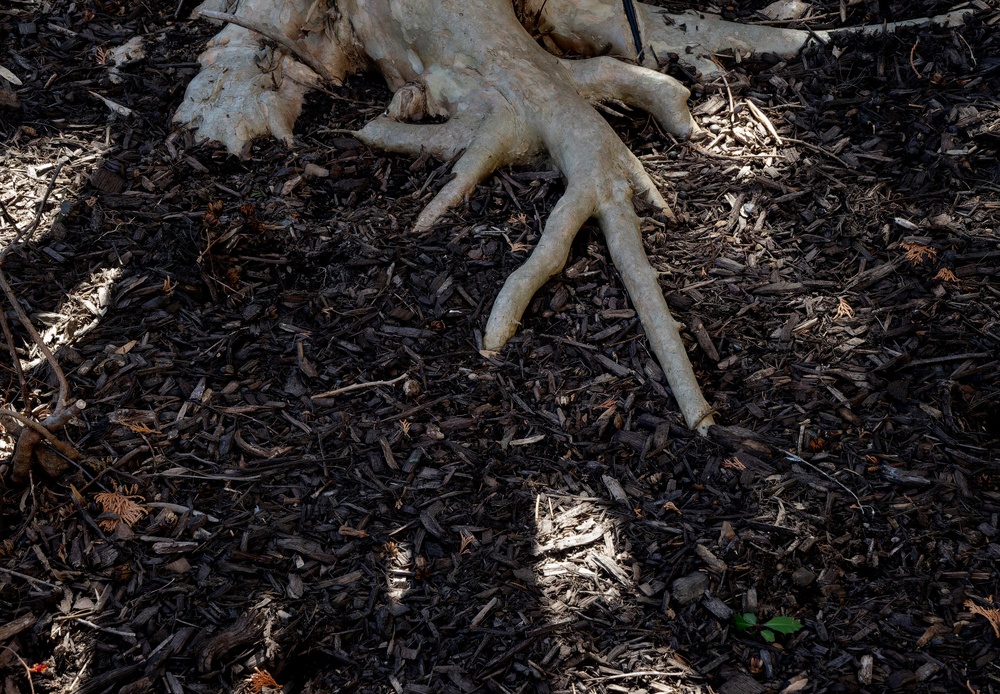
Not every exposed or visible root needs to be cut. In fact, many surface roots are normal, especially on mature trees or sites with shallow soil. Still, a few conditions deserve a closer look.
Tree root pruning can make sense when roots lift sidewalks or hard surfaces
A root growing directly beneath a walkway, patio, curb, or driveway can push the surface upward over time. The trip hazard may need attention, yet cutting the root without checking its size and distance from the trunk can create a new problem. ArborWorks can inspect the root conflict and discuss options such as selective pruning, surface repair, route changes, or another tree-care plan.
Tree root pruning may help when girdling roots press against the trunk or root flare
Girdling roots grow across or around the base of a tree instead of spreading outward. As the tree grows, a tight root can press against trunk tissue or other roots and interfere with normal growth. In some cases, carefully removing the problem root can improve the tree’s long-term condition, but the cut needs to account for root size, location, and how much of the root system would remain.
Tree root pruning may help before construction or excavation
New patios, additions, utility lines, drainage work, fences, and grading can place digging equipment inside the root zone. Planned root cuts are often safer than letting an excavator tear roots apart. Before work begins, an arborist can identify roots that should remain, areas that need protection, and sections where controlled pruning may be possible.
Tree root pruning may come up when roots conflict with underground or nearby structures
A root close to a pipe, retaining wall, footing, or other built feature doesn’t automatically mean the root is causing damage. An arborist should confirm the source of the problem before making any cut. ArborWorks can assess the tree, the visible root pattern, and the site conditions so the property owner doesn’t remove a root that was never the real cause.
Tree root pruning may be part of moving or saving a tree during site changes
Trees sometimes need preparation before relocation. Root pruning can encourage new root growth closer to the future root ball when done at the right time and in the right pattern. This type of work needs planning, since cutting too many roots at once can stress the tree or reduce support.
How Tree Root Pruning Can Affect Tree Stability
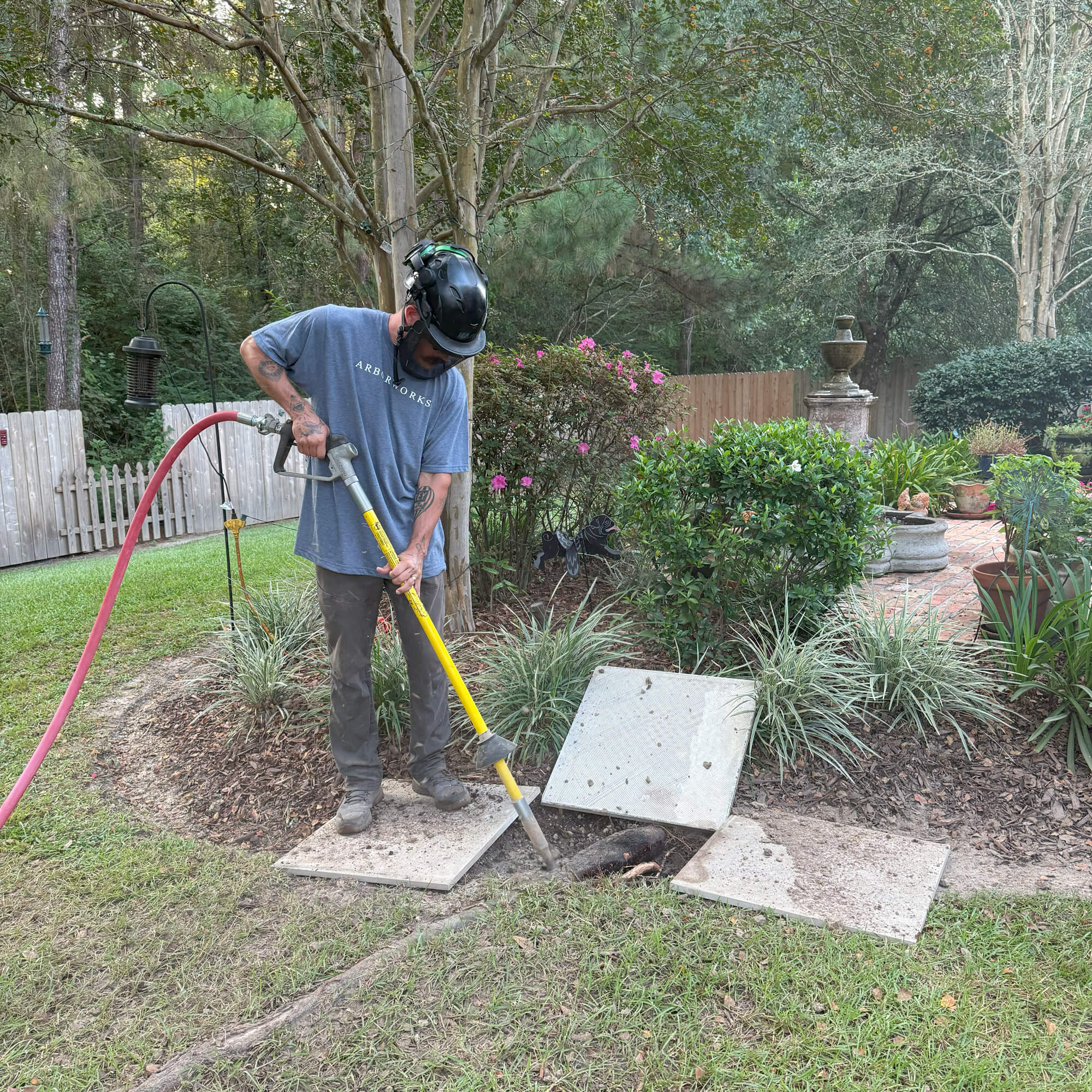
Root size matters. A small root near the soil surface serves a different role from a large structural root close to the trunk. For that reason, the question isn’t simply, “Is cutting this root safe?” A better question is, “What happens to the tree after this particular cut?”
A mature tree can have roots extending well past the edge of the canopy. Many fine roots that take in water and nutrients sit in the upper soil, so trenching, grading, compaction, or repeated digging can injure more roots than a property owner expects. At the same time, cutting a large root near the trunk may reduce support on one side of the tree.
This concern matters in South Louisiana, where heavy rain, soft ground, and storms can place added force on mature trees. If a root conflict appears near a large tree, ArborWorks can pair a root-zone review with a Tree Health Inspection to check canopy condition, trunk defects, root flare condition, and visible signs of stress.
For properties exposed to severe weather, Storm Prep & Risk Mitigation can help identify tree concerns before the next storm season. Checking root condition early can give a property owner more options before high winds and saturated soil place extra strain on a tree.
Does Tree Root Pruning Keep Roots Small?
A common question is, does pruning a tree keep roots small? Crown pruning and root growth are connected through the tree’s energy needs, but trimming branches isn’t a dependable way to keep the entire root system small. Trees continue producing roots where soil, moisture, oxygen, and growing space support new growth.
Direct tree root pruning removes selected roots at the cut location. New roots can grow near a pruning cut, so the treatment doesn’t act like permanent size control for the whole root system. If roots repeatedly conflict with pavement or structures, ArborWorks may recommend a broader plan rather than repeated cutting.
That plan may include proper Tree Trimming for canopy care, soil work, root-zone protection, or changes to nearby hard surfaces. The right solution depends on the tree species, age, health, root size, distance from the trunk, and property layout.
Does Tree Root Pruning Reduce Root Growth?
Property owners often ask, does pruning a tree reduce root growth? It can remove existing root tissue and temporarily change where new roots develop, but it doesn’t mean root growth stops across the tree. A healthy tree will often produce new roots after a cut when growing conditions support recovery.
For that reason, property owners shouldn’t use tree root pruning as a simple way to “shrink” a mature tree underground. Repeated root cutting can drain stored energy, reduce water uptake, open wounds to decay, and weaken anchoring. The better goal is to solve a defined root conflict with the least amount of injury needed.
Tree health can affect recovery after root work, too. If soil is poor or the tree shows nutrient concerns, ArborWorks may discuss Tree Fertilization after an inspection and soil-based review. Fertilizer isn’t a cure for damaged roots, though, so an arborist should match treatment to the actual condition rather than apply it automatically.
When Tree Root Pruning Should Not Be a DIY Project
A visible root can look easy to remove with a saw or axe. The risky part is that the root’s role isn’t obvious from the surface. A root only a few inches wide may carry a large amount of water or support a major section of the tree.
Before cutting, ArborWorks looks at factors such as root diameter, root location, tree size, species, health, soil condition, nearby structures, and recent site changes. Distance from the trunk matters, too. A cut close to the trunk can carry more risk than a cut farther away, especially if the root contributes to support.
DIY root cutting can create another issue: the damage may not show up right away. Leaf thinning, branch dieback, reduced growth, decay, or instability may appear later. By that point, no one can reverse the original cut. An arborist-led plan gives the tree a better chance of recovering from necessary root work.
How ArborWorks Approaches Tree Root Pruning
ArborWorks starts with the reason for the root concern, not with a saw. A root lifting a walkway needs a different plan from a girdling root at the trunk, and construction near a mature oak needs a different plan from preparing a smaller tree for relocation.
An ISA-certified arborist can inspect the site, identify visible root issues, review tree health, and explain the risk tied to each option. From there, ArborWorks can recommend selective tree root pruning, root-zone protection, pruning above ground, site changes, ongoing monitoring, or another service that fits the condition.
In some cases, preserving the tree may no longer be the safest choice. Severe root damage, decay, poor anchoring, or major site changes can leave a tree with too little support. If an inspection shows that removal is the safer path, ArborWorks can discuss professional Tree Removal and the reasons behind that recommendation.
Choose ArborWorks for Tree Root Pruning and Tree Care
Tree root pruning can solve certain property conflicts, yet the wrong cut can leave a healthy tree stressed or less stable. Before removing a large root, trenching near a trunk, repairing a lifted surface, or starting construction around mature trees, schedule a professional inspection.
ArborWorks can check the tree, explain the safest options in plain language, and recommend the least damaging path for the property. For root concerns, tree health checks, storm planning, trimming, or removal needs, call (985) 951-0128 or visit the ArborWorks Contact Page to schedule service.
Tree Root Pruning FAQs
Can Tree Root Pruning Damage a Tree?
Yes. Tree root pruning can damage a tree if cuts remove too much root tissue, sever large support roots, or occur too close to the trunk. The risk depends on the tree’s size, health, species, soil, root location, and the amount of root loss. An arborist inspection helps judge those factors before cutting starts.
How Far From the Trunk Should Tree Root Pruning Take Place?
There isn’t one safe distance that works for every tree. Larger trees, older trees, weak trees, and trees with existing root loss may need a wider protected area. ArborWorks can evaluate the trunk diameter, root flare, visible root pattern, and site conditions before setting a pruning line.
Can Tree Root Pruning Stop a Sidewalk From Lifting Again?
It may solve a specific root conflict, but regrowth or nearby roots can create future movement. In some cases, changing the walkway, creating more soil space, or using another surface design may reduce repeat problems better than cutting roots again and again.
Does Tree Root Pruning Help With Foundation Problems?
A nearby tree shouldn’t be blamed for foundation trouble without a proper site review. Soil movement, drainage, construction, existing cracks, and other site conditions can play a role. If roots appear near a damaged area, an arborist can inspect the tree before any root is removed.