


If a tree needs shaping, cleanup, or branch removal, the tool matters just as much as the cut. A clean cut helps a tree recover better. A poor cut can tear bark, crush living tissue, or leave a branch in rough shape. That is why property owners often ask which tree trimming tools are used for different jobs and whether those tools are safe to use from the ground.
At ArborWorks, tree care starts with matching the tool to the branch size, the branch location, and the condition of the tree. University and government pruning guides agree on that point. Small branches call for hand pruners, medium limbs often need loppers, and larger wood usually calls for a pruning saw or a pole tool. They also note that jobs involving height, heavy limbs, or utility lines should be left to trained professionals.
That makes this topic pretty simple at its core. There are many tools for trimming trees, yet each one has a job it handles best. Some work well for fresh green growth. Some are better for dead wood. Some are fine for light yard work. Others should stay in the hands of a trained crew with the right safety gear.
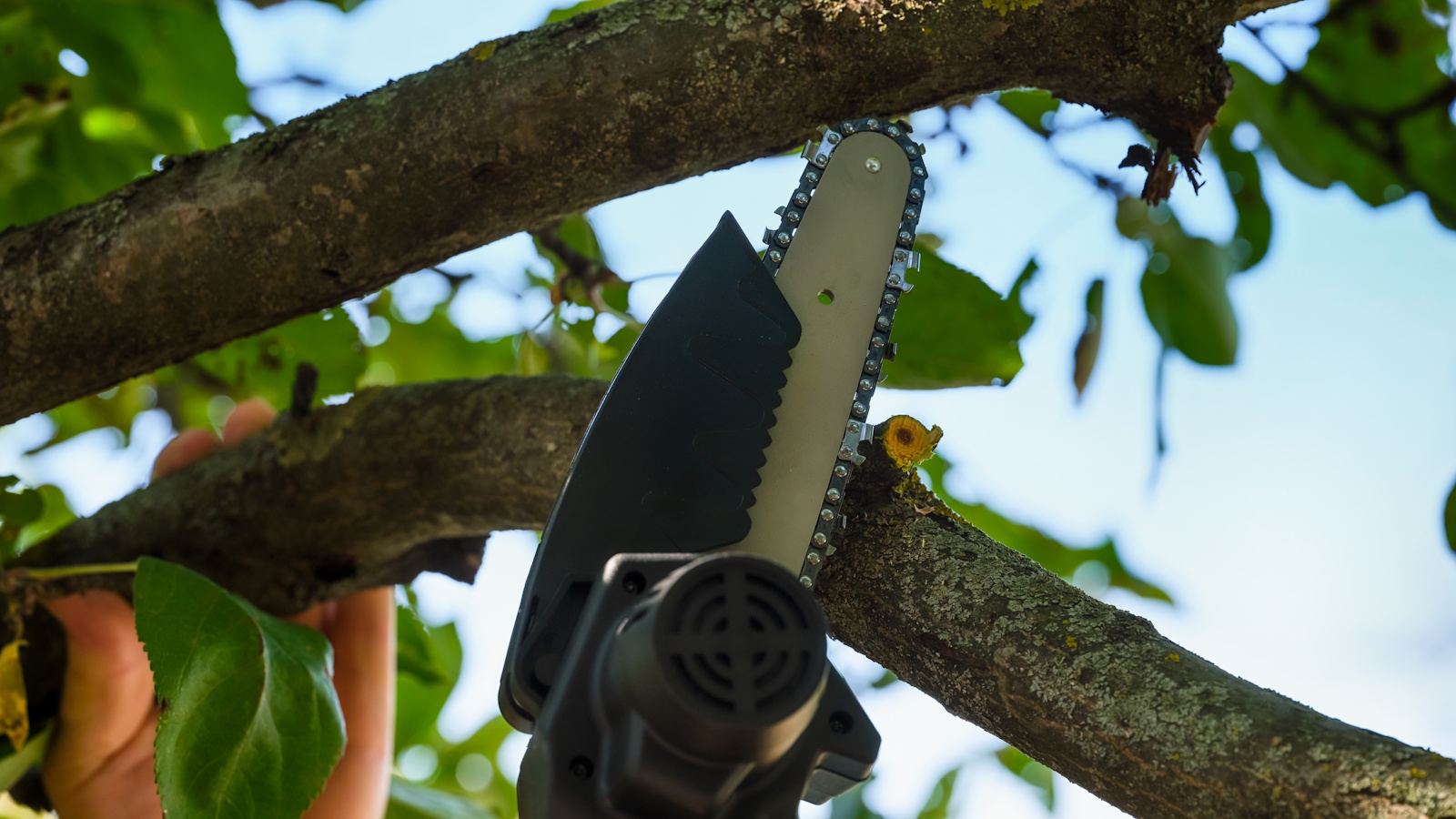
Why Tree Trimming Tools Matter So Much
The wrong cut can cause more trouble than the branch itself. A dull blade can crush live tissue. A tool that is too small can twist and rip bark. A tool that is too large can make it harder to control the cut. Good pruning guides from Iowa State, UNH Extension, and the U.S. Forest Service all point back to the same idea: use the right tool for the branch diameter and keep that tool in good condition.
That matters for safety, yet it matters for tree health too. Clean cuts usually close better than jagged ones. Branches cut in the right place are less likely to leave stubs or torn wood behind. So, if a tree has overgrown limbs, storm damage, or low branches over a driveway, choosing the right tools for trimming tree branches can make a big difference.
For trees that are already stressed, the tool choice becomes even more important. A weak or diseased tree may need more than a quick trim. In those cases, ArborWorks often recommends a Tree Health Inspection before any major work begins.
Types of Tree Trimming Tools for Small Branches
Small branches are where many people start. These are usually the easiest cuts, yet they still need care.
- Hand pruners are best for small stems and twigs. Extension sources commonly place them in the range of about one-half inch to three-quarters of an inch, depending on the tool and the wood. They are one of the most common tools for tree trimming because they are easy to carry, easy to control, and good for detail work around younger trees and small ornamental branches.
- Bypass pruners are usually the better pick for live wood. They cut more like scissors, which helps create a cleaner cut. That cleaner action is one reason many pruning guides prefer bypass pruners for living branches that need to heal well.
- Anvil pruners have a blade that closes against a flat surface. They can work for dead stems or light cleanup, yet they are usually not the top choice for live branches because they can crush plant tissue instead of slicing through it cleanly.
These tree trimming tools are helpful for light maintenance, but they do have limits. Once a branch gets thicker, forcing the cut with hand pruners can strain the tool and damage the tree.
Types of Tree Trimming Tools for Medium Branches
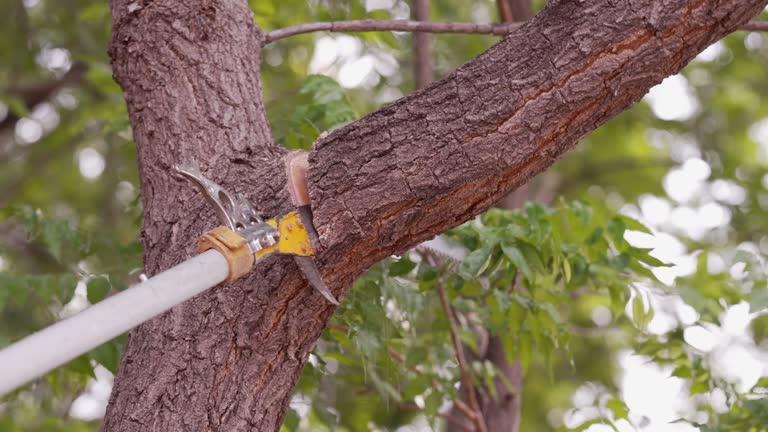
Once branches get larger, more leverage is needed. That is where loppers come in.
- Loppers have long handles and larger cutting heads. They are made for branches that are too thick for hand pruners yet still small enough for a controlled cut. Extension sources often place them around one inch to two inches, though that can vary by tool design and branch condition.
- These tools for trimming tree branches give more reach and more cutting force. That makes them useful for thinning crowded growth, removing low limbs, and cleaning up smaller storm damage.
- Loppers still are not the answer for every branch. If the limb is too thick for the blades, trying to muscle through it can tear bark and leave a poor cut. In plain terms, if the tool is fighting back, that is a sign the job may need a saw instead. Maryland and UNH guidance both warn against trying to overwork loppers on branches that are too large.
For property owners looking at medium-sized growth near the roofline or over a fence, it is smart to pause before cutting. Branch weight changes fast, and a limb that looks small from below can still swing, split, or fall the wrong way.
Types of Tree Trimming Tools for Large Branches
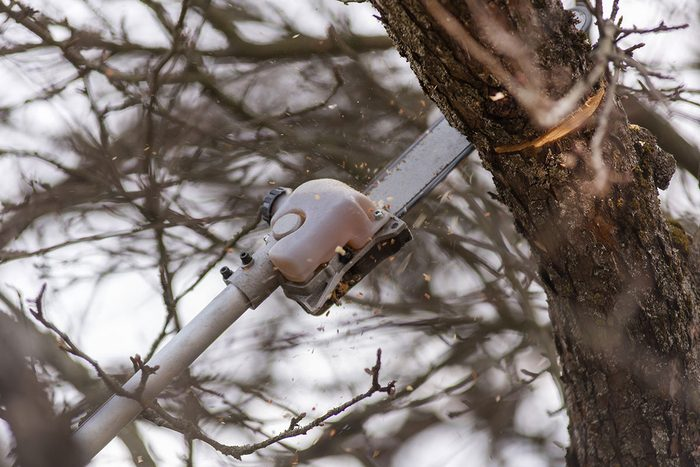
Larger limbs need a different approach. This is where pruning saws come into play.
- Pruning saws are made for branches that are too large for hand shears or loppers. Texas A&M notes that rigid and folding pruning saws are useful for larger branches, and Colorado guidance points out that curved tree saws often cut on the pull stroke.
- A good pruning saw can make a cleaner cut on thicker wood than many other manual tree trimming tools. That matters when the goal is to remove a branch without shredding the bark.
- Some saws are straight. Some are curved. Some fold for transport. The style matters less than control, sharpness, and using the saw on the right branch.
This is usually the stage where tree work starts moving out of basic yard maintenance and into professional care. Large limbs carry weight, and that weight shifts during the cut. If the limb hangs over a house, a parked vehicle, a walkway, or another tree, the risk rises in a hurry. That is often when ArborWorks recommends professional Tree Removal or skilled Tree Trimming instead of a do-it-yourself attempt.
Types of Tree Trimming Tools for High Branches
Height changes everything. A small branch can become a risky job the second it sits overhead.
- Pole pruners are used for small branches that cannot be reached from the ground. They can help remove light growth without a ladder, and that can be safer than climbing for a minor cut. At the same time, Colorado guidance notes that making good pruning cuts with pole pruners can be difficult.
- Pole saws are used for larger overhead branches. They can help with reach, yet they demand strength, balance, and care. A branch that drops from above does not give much warning.
- Powered pole tools may speed up the work, yet they add another layer of risk. More reach and more cutting force can sound handy, but control becomes harder once overhead cutting enters the picture.
At ArborWorks, overhead cuts get handled with planning, proper positioning, and job-specific safety steps. Trees near structures or power lines should never be treated like a weekend chore. Cornell’s pruning guidance is clear that work near utility wires, large branch removal, and jobs that require climbing should be handled by a professional arborist.
Other Tree Trimming Tools That Support the Job
Some tools are not used to cut, yet they still matter.
- Sharpening tools help keep blades clean and effective. A sharp blade cuts better and puts less stress on the branch.
- Disinfecting supplies can be useful when working around disease concerns. Clean tools help reduce the chance of carrying problems from one cut to another.
- Safety gear matters every single time. USDA and NRCS materials point to eye protection, gloves, and other protective gear during pruning work.
- Ropes, rigging gear, and climbing equipment are part of professional tree work, not casual yard work. Those items are used with training and planning, especially during storm cleanup or heavy limb removal.
For storm season in Louisiana, the real issue is often not just what tool gets used. The bigger question is whether the tree should be pruned at all, how much should come off, and whether the canopy needs risk reduction before rough weather moves in. That is where ArborWorks can help with Storm Prep & Risk Mitigation.
How ArborWorks Chooses the Right Tree Trimming Tools
There is no one-size-fits-all answer. The right tool depends on branch size, branch height, tree species, tree condition, and the goal of the pruning work.
ArborWorks looks at the full picture before making a cut. If a tree just needs light shaping, smaller tools for trimming trees may be enough. If a branch is heavy, cracked, diseased, or hanging over a target, the job may call for advanced equipment and a trained crew. If the tree is declining, pruning might need to wait until its condition is checked.
That is one reason hiring a certified arborist saves so many property owners from costly mistakes. Tree work is not just about removing wood. It is about knowing what to cut, where to cut, and what should stay put.
When to Put the Tree Trimming Tools Down and Call ArborWorks
Some jobs should never turn into a do-it-yourself project.
- If branches are touching or near power lines, stop right there. That is a professional job.
- If the branch is large enough to injure someone or damage property, it is time for trained help.
- If the tree is storm-damaged, split, hollow, leaning, or dropping large limbs, it needs an inspection before any cutting starts.
- If ladders are part of the plan, that is usually a sign the risk is climbing fast.
- If the branch weight or fall path is unclear, guesswork is a bad bet.
That is where ArborWorks steps in. Safe pruning is about more than owning a few tree trimming tools. It takes training, judgment, and a clear plan.
Contact ArborWorks for Tree Trimming Services in Louisiana
The main types of tree trimming tools are pretty easy to sort once the branch size and branch height are clear. Hand pruners handle the smallest growth. Loppers help with medium limbs. Pruning saws deal with thicker wood. Pole tools help with reach, yet overhead work raises the risk.
That said, owning tools for trimming trees does not make every tree job safe. A clean cut on a low branch is one thing. A heavy limb over a roof is a very different story. ArborWorks helps property owners make the right call before a small problem turns into storm damage, property damage, or an injured tree.
If a tree on your property needs care, ArborWorks is ready to help with trimming, inspections, risk checks, and removal when needed. Contact the team through the Contact Page or call (985) 951-0128 to schedule service.
FAQs About Tree Trimming Tools
What are the most common tree trimming tools?
The most common tools are hand pruners, loppers, pruning saws, pole pruners, and pole saws. Each one fits a different branch size and height.
Which tool is best for small live branches?
Bypass hand pruners are often the better choice for small live branches because they make a cleaner cut than anvil-style pruners.
Are hedge shears good tools for trimming tree branches?
Not usually. Hedge shears are meant for hedges and shaping soft growth, not for proper branch pruning on trees. Maryland Extension notes that pruning shears of that type are for hedges only.
Can a homeowner use pole pruners safely?
For light, reachable work from solid ground, sometimes yes. For overhead cuts, larger limbs, unstable footing, or anything near wires, it is safer to call a professional crew.
What if the tree looks unhealthy before trimming starts?
A health check should come first. ArborWorks can inspect the tree and decide whether pruning, treatment, support, or removal is the safer option through a Tree Health Inspection.