


Healthy trees don’t happen by accident. Strong roots, steady growth, and full canopies come from the right care at the right time. One topic that often raises questions is tree fertilizer. Many homeowners ask whether trees need it, which products help, and when feeding actually makes sense.
At ArborWorks, guidance comes from ISA-certified arborists who look at soil conditions, tree species, and site stressors before any feeding plan begins. This page walks through tree fertilizer basics in clear terms, without jargon, so property owners know what helps and what hurts.
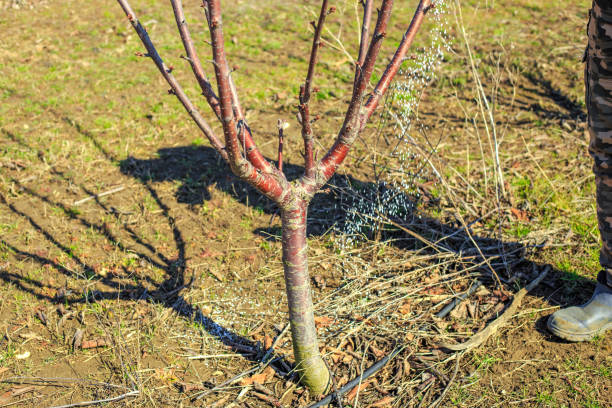
Tree Fertilizer Basics: What Homeowners Should Know About Tree Nutrition
Trees feed through their roots, not their leaves. Roots pull nutrients from the soil, then move those nutrients up through the tree. When soil lacks balance, growth slows, leaves thin out, and trees struggle under stress.
Tree fertilizer adds missing nutrients back into the soil. It does not act like fuel or a quick fix. Instead, it supports steady health over time when used the right way.
Nutrients trees rely on include:
- Nitrogen, which supports leaf growth and color
- Phosphorus, which helps roots develop
- Potassium, which supports strength and stress response
At the same time, trees need micronutrients like iron and manganese. Soil tests show which nutrients fall short, so fertilization matches actual needs rather than guesswork.
Tree Fertilizer Basics: What Homeowners Should Know Before Fertilizing
Fertilizer helps only when a tree truly needs it. Feeding a healthy tree without a clear reason can cause more harm than good.
Common signs a tree may benefit from tree fertilizer include:
- Leaves that look pale or smaller than usual over more than one season. This often points to low nitrogen levels rather than weather alone.
- Short annual growth on branches. Healthy trees add visible length each year, even during slower seasons.
- Thin canopies where light passes through easily. This may signal nutrient stress tied to soil quality.
At the same time, similar symptoms can come from pests, root damage, or compacted soil. That’s why a professional Tree Health Inspection matters before any feeding plan begins. ArborWorks uses inspections to rule out non-nutrient issues first.
What Homeowners Should Know About the Best Fertilizer for Trees
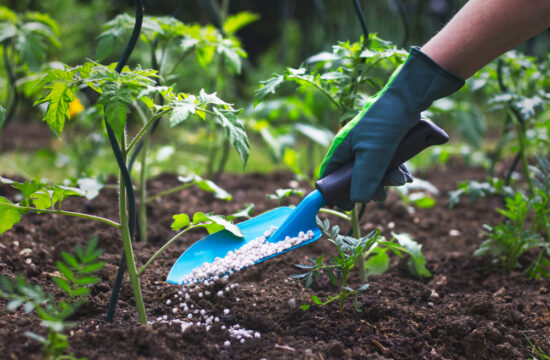
The best fertilizer for trees depends on tree type, soil makeup, and site conditions. There is no single product that fits every yard.
Slow-release fertilizers often work best. They feed roots gradually, which mirrors how trees absorb nutrients in nature. Quick-release products push fast growth, which can weaken branches and attract pests.
A proper fertilization plan often includes:
- Soil testing to identify real nutrient gaps instead of guessing. This keeps feeding precise and avoids over-application.
- Deep root fertilization, which places nutrients where roots actually grow. Surface spreading often misses the target.
- Balanced formulas, adjusted to tree species and age. Young trees and mature trees do not share the same needs.
When ArborWorks selects the best fertilizer for trees, the focus stays on long-term health rather than short bursts of growth.
Tree Fertilizer Basics: What Homeowners Should Know About the Best Time to Fertilize Trees
Timing matters just as much as product choice. The best time to fertilize trees often falls during periods of root activity rather than peak leaf growth.
Spring and fall usually offer the strongest results:
- Spring feeding supports leaf and shoot growth as trees come out of dormancy. Roots wake up early, even before buds open.
- Fall feeding supports root storage for winter. This prepares trees for cold stress and stronger spring growth.
Summer fertilization can work in some cases, though heat stress and drought change how roots respond. Winter feeding rarely helps since roots slow down in cold soil.
Local conditions, tree species, and soil temperature all play roles. ArborWorks evaluates timing carefully so tree fertilizer supports growth instead of stressing the tree.
What are Risks of Improper Fertilizing
Too much fertilizer causes real damage. Excess nitrogen can push fast, weak growth that snaps during storms. Overfeeding can burn roots and disrupt soil biology.
Common fertilizing mistakes include:
- Applying lawn fertilizer near tree roots. Grass products often carry high nitrogen levels that trees cannot handle.
- Feeding trees already under stress from construction or root damage. In those cases, fertilizer adds strain instead of relief.
- Skipping inspections before fertilizing. Nutrient issues often get confused with disease or pest damage. Storm-related failures often trace back to poor root health. ArborWorks pairs fertilization plans with Storm Prep & Risk Mitigation strategies to reduce failure risk.
Storm Prep & Risk Mitigation
What Homeowners Should Know About Professional Tree Care
Fertilizer works best as part of a complete care plan. Feeding alone cannot fix structural issues, decay, or overcrowded canopies.
Professional care may include:
- Tree Trimming to balance growth and reduce stress on branches. Proper pruning supports better nutrient movement.
- Tree Removal for declining or hazardous trees that no longer respond to treatment. Removing failing trees protects nearby healthy ones.
ArborWorks looks at soil, structure, environment, and safety together, so tree fertilizer supports the whole property rather than working in isolation.
Contact ArborWorks for Tree Health Inspection in Louisiana
Tree care works best when decisions follow science rather than guesswork. ArborWorks uses inspections, soil evaluation, and proven methods to guide every fertilization plan.
For questions about tree fertilizer, tree health, or long-term care, reach out to ArborWorks today.
Call (985) 951-0128 or visit the Contact Page to schedule a consultation and keep trees growing strong year after year.
Tree Fertilizer Basics: What Homeowners Should Know — FAQs
Does every tree need fertilizer?
No. Many trees grow well in native soil. Fertilizer helps only when soil tests or growth patterns show a need.
Can fertilizer replace watering?
No. Water moves nutrients through the soil. Without proper moisture, fertilizer cannot reach roots.
Is organic fertilizer better for trees?
Organic products can help soil structure and microbial activity. Results depend on soil needs and application methods.
How often should trees receive fertilizer?
Frequency depends on tree condition and soil quality. Some trees benefit every few years, others need none at all.